
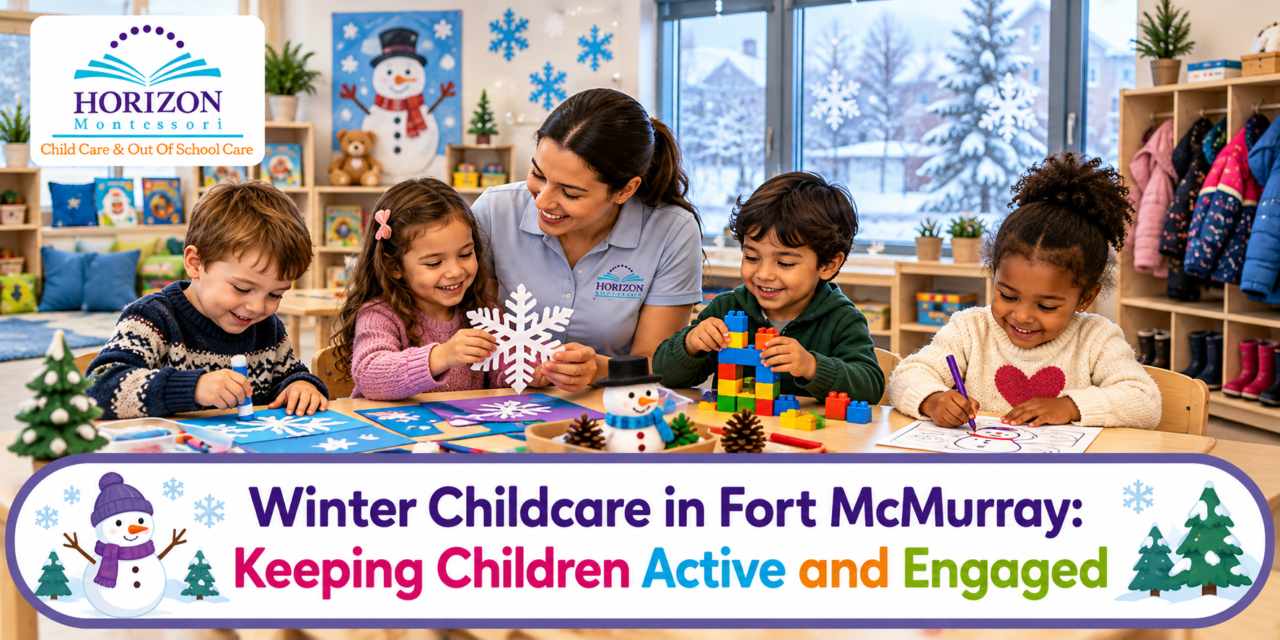
Winter in Fort McMurray can bring cold temperatures, snow, and shorter periods of comfortable outdoor play. For young children, however, winter does not have to mean staying inactive.
A quality Childcare Fort McMurray program can turn the winter season into an opportunity for movement, creativity, exploration, and learning. Children can enjoy outdoor snow experiences when conditions are appropriate and then return indoors for activities designed to keep their bodies and minds engaged.
Winter childcare requires planning. Educators need to consider weather conditions, appropriate clothing, indoor space, children’s ages, and individual needs.
The goal is simple: children should have meaningful opportunities to move, explore, learn, and interact throughout the day.
Research on early childhood development emphasizes the importance of physical activity, play, responsive relationships, and developmentally appropriate learning experiences.
Why Staying Active Matters During Winter
Children need regular movement throughout the year. Physical activity supports developing muscles, bones, coordination, balance, and motor skills.
Young children also learn through movement. Running, jumping, climbing, balancing, carrying, reaching, and throwing help children understand how their bodies work.
Physical Benefits of Active Play
Regular movement can help children develop:
- Gross motor skills
- Balance and coordination
- Strength and endurance
- Spatial awareness
- Body control
- Confidence in physical abilities
For younger children, activities do not need to look like formal exercise. Dancing, crawling through an obstacle course, building with large blocks, or playing an active game can all provide valuable movement.
Social and Emotional Benefits
Active play also provides social opportunities.
Children learn to take turns, follow simple rules, cooperate with others, and manage excitement or frustration.
For example, a group movement game may require children to wait for their turn. A building activity may require two children to work together.
As a result, winter activities can support both physical and social development.
How Winter Daycare Keeps Children Active
A good Winter Daycare Fort McMurray program does not rely on one type of activity. Instead, educators can create a balanced schedule that includes different forms of movement and learning.
Indoor Movement Games
Indoor activities can help children stay active when outdoor conditions are unsuitable.
Educators may organize:
- Follow-the-leader games
- Dance sessions
- Animal movement games
- Indoor obstacle courses
- Balloon activities
- Musical movement games
- Balance challenges
- Action songs
These activities can be adapted for different age groups.
A toddler might crawl through a soft tunnel, while an older preschooler might complete a simple obstacle course.
Music and Dance
Music provides an easy way to combine physical activity with creativity.
Children can clap, jump, march, spin, stretch, or move according to different rhythms.
Educators can also encourage children to create their own movements. This supports creativity while helping children develop body awareness and coordination.
Safe Outdoor Winter Play in Fort McMurray
Cold weather does not automatically mean children cannot go outside.
Outdoor winter play can provide valuable sensory and physical experiences when weather and safety conditions are appropriate.
Exploring Snow
Snow gives children a completely different environment to explore.
Children can:
- Build snow structures
- Make snow tracks
- Observe footprints
- Explore textures
- Look for natural objects
- Experiment with snow and water
- Practice scooping and carrying
These simple activities can turn outdoor play into an early learning experience.
Winter Walking and Movement
Walking through snow requires children to adjust their balance and movement.
Educators can organize simple walking activities where children look for specific objects or follow safe paths.
These experiences can support gross motor development while encouraging observation and exploration.
Weather Safety Comes First
Outdoor winter play must always consider current weather and site conditions.
Educators should follow appropriate policies for temperature, wind, visibility, clothing, supervision, and outdoor conditions.
Children should have suitable winter clothing, including warm layers, boots, hats, mittens or gloves, and other items recommended by the childcare provider.
Creative Indoor Activities for Winter
Not every winter activity needs to involve physical movement.
Children also need opportunities to slow down, concentrate, create, and explore ideas.
Winter Art Projects
Art activities can help children express ideas while developing fine motor skills.
Children can create:
- Snowflake artwork
- Winter landscapes
- Snowman crafts
- Winter animal pictures
- Nature collages
- Finger paintings
- Seasonal decorations
For toddlers, educators can provide large, safe materials that are easy to handle.
Older preschool children may enjoy more detailed projects that involve cutting, drawing, gluing, or arranging materials.
Storytelling and Books
Winter-themed books can support language development and imagination.
Educators can read stories about snow, animals, families, friendship, or winter adventures.
After reading, they can ask simple questions:
“What happened in the story?”
“How did the character feel?”
“What do you think happens next?”
These conversations encourage children to listen, remember information, express opinions, and build vocabulary.
Sensory Activities for Toddlers
A Toddler Childcare Fort McMurray program can use sensory activities to help young children explore their environment.
Sensory play allows children to investigate different textures, temperatures, shapes, sounds, and materials in an age-appropriate way.
Winter Sensory Bins
Educators can create supervised sensory activities using safe materials appropriate for the children’s ages.
For example, children might explore textured materials associated with winter or use tools to scoop, pour, sort, and transfer objects.
These activities can support:
- Fine motor skills
- Hand-eye coordination
- Concentration
- Vocabulary
- Problem-solving
- Early science concepts
All sensory materials should be selected and supervised according to children’s ages and safety requirements.
Winter STEM Activities for Preschoolers
Winter provides many opportunities for early science, technology, engineering, and mathematics learning.
What Happens to Ice?
Educators can help children observe how ice changes under different conditions.
Children can discuss questions such as:
- What happens when ice gets warmer?
- How does water change?
- Which objects feel cold?
- What happens when snow melts?
These simple observations introduce children to cause and effect.
Building Challenges
Children can also participate in age-appropriate building activities.
For example, educators might ask children to build a structure using blocks and then test whether it remains stable.
This introduces early engineering concepts such as balance, structure, and problem-solving.
Winter Activities Support Early Learning
Winter activities can connect naturally with early childhood education.
A well-planned Child Care Centre Fort McMurray can incorporate learning into everyday play rather than separating education from fun.
Early Math Skills
Children can count snowballs, sort objects, compare sizes, identify shapes, and recognize patterns.
Language Development
Children can learn winter-related vocabulary such as snow, ice, cold, warm, mittens, boots, frozen, and melt.
Science Skills
Children can observe weather, investigate ice, and explore seasonal changes.
Fine Motor Development
Drawing, cutting, building, threading, sorting, and manipulating materials help strengthen small-muscle control.
Social Skills
Group activities teach cooperation, sharing, turn-taking, communication, and problem-solving.
This integrated approach makes learning practical and engaging.
How to Keep Preschoolers Engaged During Long Winter Days
Preschool children often have plenty of energy. A long period without meaningful activities can lead to boredom or restlessness.
A Preschool Fort McMurray program can use activity rotation to maintain interest.
For example, a daily schedule might include:
- Free-choice play
- Group discussion
- Active movement
- Creative activity
- Snack or meal
- Outdoor play when appropriate
- Story time
- Sensory or STEM activity
- Quiet play
- Social group activities
The exact schedule should reflect children’s ages, needs, program policies, and daily conditions.
The key is variety.
Children should have opportunities to move, concentrate, create, communicate, and rest.
Choosing the Right Childcare Centre for Winter
Winter conditions make childcare planning especially important for Fort McMurray families.
When comparing a Childcare Centre Fort McMurray, parents should ask practical questions about winter routines.
Ask About Outdoor Play
Find out how the centre approaches outdoor activities during winter.
Ask how educators assess weather conditions and what clothing children need.
Ask About Indoor Activities
A strong program should have meaningful indoor activities available when outdoor play is not suitable.
Look for opportunities involving movement, creativity, sensory learning, books, music, and social interaction.
Ask About Winter Clothing
Understand what parents are expected to provide.
Labeling winter clothing can help reduce lost items and make daily routines easier.
Ask About Communication
Parents should know how the centre communicates about schedule changes, weather-related concerns, children’s activities, and daily experiences.
Clear communication helps families feel informed.
Winter Childcare for Toddlers
Toddlers require special consideration because they are still developing coordination, communication, independence, and emotional regulation.
A quality Toddler Childcare Fort McMurray program should provide short, varied activities that match toddlers’ developmental abilities.
Toddlers may enjoy:
- Simple movement games
- Music and action songs
- Large-block building
- Sensory exploration
- Picture books
- Simple art
- Supervised outdoor exploration
- Sorting and matching activities
Activities should allow toddlers to explore without expecting them to sit still for extended periods.
Educators can also provide simple choices to encourage independence.
For example:
“Would you like the blue block or the red block?”
Small choices can help toddlers practice communication and decision-making.
Local Relevance: Winter Childcare in Fort McMurray
Fort McMurray’s winter environment creates unique opportunities and challenges for families.
Cold weather can limit outdoor time on some days, but it also provides children with experiences they cannot get during warmer seasons.
Snow, ice, winter clothing, changing temperatures, and seasonal wildlife can all become subjects for age-appropriate learning.
Families searching for Daycare Fort McMurray or Childcare Fort McMurray should consider whether the program has a thoughtful plan for both indoor and outdoor winter experiences.
Horizon Childcare & Out of School Care supports families in Fort McMurray by creating opportunities for children to play, explore, learn, and build relationships.
The right winter routine does not simply keep children occupied. It helps them develop physical skills, curiosity, confidence, communication, and independence.
Tips for Parents During the Winter Childcare Season
Parents can also make winter childcare easier by preparing children and their belongings.
Label Winter Clothing
Clearly label coats, boots, hats, mittens, and other personal items.
Pack Extra Clothes
Snow and outdoor activities can result in wet or messy clothing. Extra clothes can help children remain comfortable.
Dress in Layers
Layered clothing can help children stay comfortable as temperatures change between indoor and outdoor environments.
Ask About Outdoor Policies
Understand how your childcare provider handles outdoor play during cold weather.
Maintain Healthy Routines
Adequate sleep, nutritious meals, hydration, and regular movement all support children’s overall well-being.
Encourage Winter Exploration at Home
Families can continue learning through simple activities such as observing snow, reading winter books, creating art, or taking safe outdoor walks.
Frequently Asked Questions
What activities keep children active during winter childcare?
Children can stay active through indoor movement games, dancing, obstacle courses, action songs, balance activities, and age-appropriate outdoor play. Creative and sensory activities can complement physical movement. A balanced winter childcare program gives children opportunities to move, explore, learn, socialize, and rest throughout the day.
Why is outdoor winter play important for children?
Outdoor winter play gives children opportunities to develop gross motor skills, coordination, balance, and confidence while experiencing seasonal changes. Snow and winter conditions also provide unique opportunities for sensory and scientific exploration. However, outdoor activities should only occur when weather, clothing, supervision, and site conditions are appropriate.
How can toddlers stay engaged during cold weather?
Toddlers can stay engaged through short, varied activities such as music, movement games, sensory exploration, building, picture books, simple art, and supervised outdoor experiences. Activities should match their developmental abilities and attention spans. Educators can also offer simple choices to encourage communication, independence, and participation.
What should parents look for in a winter daycare?
Parents should look for a daycare with clear winter safety procedures, appropriate outdoor policies, engaging indoor activities, qualified educators, and good communication with families. Ask about clothing requirements, outdoor conditions, activity schedules, emergency procedures, and how the program adapts activities when weather prevents outdoor play.
How does winter childcare support early childhood education?
Winter childcare can support early childhood education through play-based learning, movement, storytelling, art, sensory activities, science experiments, building, and social interaction. Children can practice early math, language, problem-solving, motor skills, and cooperation while exploring winter themes. These experiences make learning practical, active, and engaging.
Conclusion
Winter does not have to limit children’s learning or physical activity.
With thoughtful planning, Childcare Fort McMurray programs can provide children with engaging experiences throughout the season. Indoor movement, creative activities, sensory exploration, storytelling, early STEM activities, and safe outdoor play can all contribute to healthy development.
For families comparing Daycare Fort McMurray, Childcare Centre Fort McMurray, Preschool Fort McMurray, or Toddler Childcare Fort McMurray options, it is important to ask how each program keeps children active and engaged during winter.
A strong childcare environment provides more than supervision. It creates opportunities for children to move, explore, communicate, create, and develop confidence.
Horizon Childcare & Out of School Care is here to support families in Fort McMurray with a caring and engaging childcare environment. To learn more about programs, winter routines, and childcare options, contact Horizon Childcare & Out of School Care at +1587-276-0082 today.