
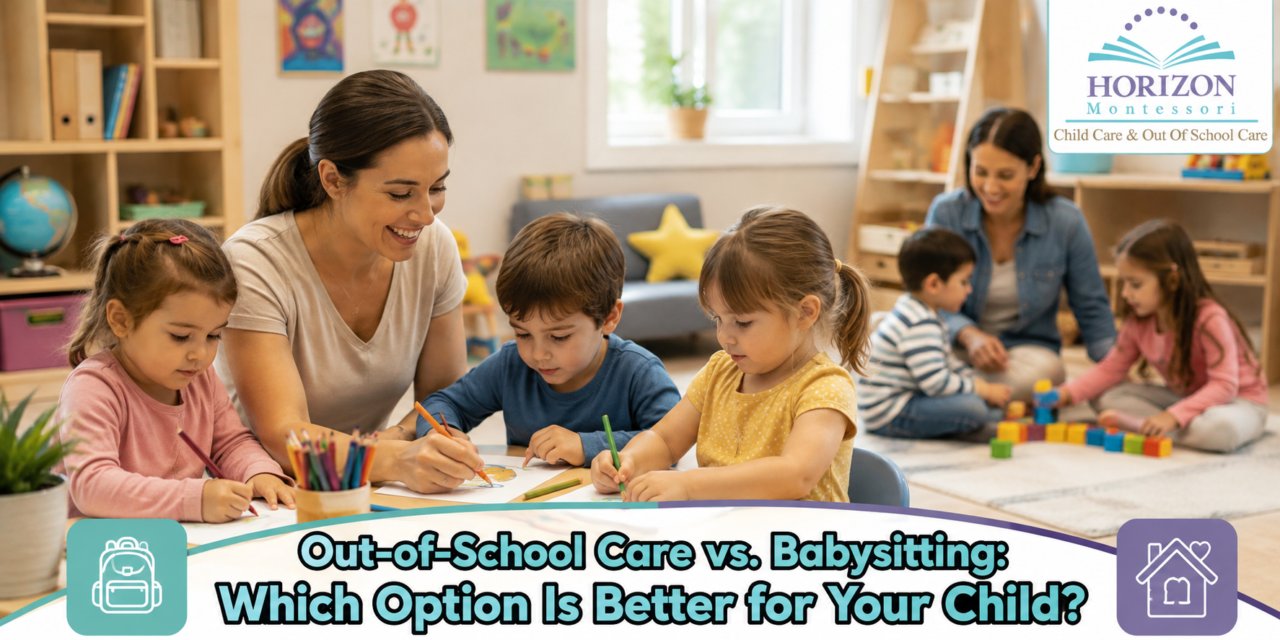
Finding reliable care for a school-age child can be challenging. School hours do not always match a parent’s work schedule, appointments, commuting time, or other responsibilities.
That is why families often compare out-of-school care Fort McMurray with private babysitting. Both options can provide supervision, but they work differently.
Out-of-school care usually follows a predictable schedule and is designed specifically for children who attend school. Babysitting is typically more individualized and flexible, but the quality, availability, and experience of the caregiver can vary.
Statistics Canada reported that in 2025, before- or after-school programs were the most common type of child care arrangement among Canadian school-age children who were receiving care. The same research found that 88% of children in child care attended care after school, compared with 43% who attended before school.
The right choice depends on your child’s age, personality, schedule, transportation needs, and the level of structure your family prefers.
What Is Out-of-School Care?
Out-of-school care is a child care service designed for school-age children before school, after school, and sometimes during school closures, professional development days, holidays, or other non-school periods.
A typical program may combine supervision with play, social activities, quiet time, creative activities, outdoor play, and age-appropriate learning opportunities.
The goal is not simply to keep children occupied. A well-organized program gives children a safe and predictable environment between school and home.
What Does Out-of-School Care Include?
Depending on the program, services may include:
- Before-school supervision
- After-school supervision
- School-day transportation or transitions
- Homework or quiet study time
- Indoor and outdoor play
- Arts and crafts
- Games and group activities
- Social interaction with peers
- Vacation or school-break programming
- Supervised routines
Parents should always ask a provider which services are actually included because programs differ.
What Is Babysitting?
Babysitting usually involves an individual caregiver looking after a child for a specific period. The babysitter may care for the child in the family’s home or another agreed location.
Babysitting can be especially useful when parents need occasional coverage. For example, a family may hire a babysitter for an evening, weekend appointment, date night, or unexpected work commitment.
The main advantage is flexibility.
However, babysitting may not provide the same group environment, daily routine, or program-based activities that families may expect from formal school-age child care Fort McMurray.
Out-of-School Care vs. Babysitting: Key Differences
The best option becomes easier to identify when you compare the two services across several important factors.
1. Structure and Routine
Out-of-school care generally follows a planned daily schedule. Children know when they will arrive, eat, play, complete quiet activities, and prepare to go home.
A consistent routine can help school-age children understand expectations and transition smoothly between school and home.
Babysitting can also follow a routine, but it depends more heavily on the caregiver and the family’s instructions.
Best for structure: Out-of-school care.
2. Flexibility
Babysitting usually wins when flexibility is the top priority.
A babysitter may be able to provide care on evenings, weekends, holidays, or during unusual hours. Families can often arrange care based on individual needs.
Out-of-school care is usually tied to specific operating hours and enrollment arrangements.
Best for irregular schedules: Babysitting.
3. Social Interaction
One important advantage of organized after-school care Fort McMurray programs is the opportunity for children to spend time with peers.
Children can play games, participate in group activities, practice communication, share materials, solve problems, and build friendships.
Babysitting provides more individualized attention, but a child may have fewer opportunities for peer interaction unless the babysitter organizes playdates or community activities.
Best for regular peer interaction: Out-of-school care.
4. Individual Attention
A babysitter can provide one-on-one attention. This can be helpful for children who prefer quiet environments or need personalized support.
For example, a babysitter may help with homework, prepare a snack, supervise a specific activity, and follow a child’s familiar home routine.
Out-of-school care involves a group setting, so children may have to share adult attention with other children.
Best for one-on-one attention: Babysitting.
5. Cost and Value
Cost is an important consideration for every family.
The price of care depends on factors such as location, hours, frequency, provider, staffing, transportation, and the services included.
Statistics Canada found that 42% of parents identified affordability as one factor influencing their choice of before- or after-school care, while 40% of parents in the 2025 survey identified operating hours as an important consideration.
Instead of comparing hourly prices alone, compare the total value. Consider how many hours of supervision you receive, whether activities are included, and whether transportation or other services are available.
Why Families Choose Before and After School Care
Before and after school care Fort McMurray can solve a common scheduling problem: the gap between school hours and the working day.
For example, a parent may start work at 8:00 a.m. while school begins later. Another parent may finish work at 5:00 p.m. while school ends earlier.
A reliable program can bridge that gap.
Before-School Care
Before-school care gives children a supervised place to stay before the school day begins.
Depending on the program, children may have breakfast, participate in quiet activities, play, or prepare for school.
After-School Care
After-school care begins when the regular school day ends.
Children may have time to relax, eat a snack, play with friends, complete homework, participate in activities, or spend time outdoors before their parents arrive.
Statistics Canada reported that after-school care was substantially more common than before-school care among Canadian children using child care in 2025.
Benefits of Out-of-School Care for School-Age Children
A Predictable Daily Routine
Children often benefit from knowing what comes next.
A predictable routine can make transitions easier and give children clear expectations.
Opportunities for Social Development
Group care allows children to interact with peers regularly.
They can practice cooperation, communication, patience, conflict resolution, and teamwork through everyday activities.
Age-Appropriate Activities
A dedicated school-age program can plan activities around children’s developmental stage.
Activities may include crafts, games, reading, outdoor play, building projects, and other supervised experiences.
Support During the Workday
For working parents, reliable care can reduce the stress of coordinating school dismissal with work responsibilities.
It can create a dependable bridge between school and home.
Continuity of Care
Using the same program regularly can help children become familiar with caregivers, routines, expectations, and other children.
This consistency can be particularly valuable for younger school-age children who are still developing independence.
When Babysitting May Be the Better Choice
Out-of-school care is not automatically the right answer for every family.
Babysitting may be a better option when:
- You need care only occasionally.
- Your work schedule changes frequently.
- You need evening or weekend supervision.
- Your child does better with one-on-one attention.
- You need care in your own home.
- Your child has a short-term or specific supervision need.
- You need care outside the operating hours of a formal program.
For example, a family may use an after-school program during the regular workweek and hire a babysitter occasionally for an evening commitment.
These options do not always have to compete. Some families can use both.
How to Choose the Best Child Care Option
Before enrolling or hiring a caregiver, make a practical checklist.
Consider Your Schedule
Write down your actual weekly schedule.
Ask:
- What time does my child leave school?
- What time do I finish work?
- Do I need before-school care?
- Do I need after-school care?
- Do I need coverage on school holidays?
- How often will I need care?
This will quickly show whether you need regular care or occasional babysitting.
Consider Your Child’s Personality
Think about how your child responds to group settings.
Some children enjoy busy environments and making friends. Others prefer quieter, individualized attention.
Your child’s comfort matters.
Consider Transportation
Transportation can be one of the most important practical issues.
Ask whether the program is located near your child’s school, home, or workplace. Also confirm whether transportation is provided and what arrangements apply.
Statistics Canada found that location was the most commonly reported criterion parents used when choosing their main child care arrangement in 2025.
Ask About Safety and Supervision
Parents should understand how supervision works.
Ask about:
- Staff qualifications and experience
- Child-to-staff ratios
- Emergency procedures
- Sign-in and sign-out procedures
- Authorized pickup policies
- Indoor and outdoor safety
- Communication with parents
- Policies for illness and emergencies
For licensed child care, parents should also confirm the provider’s licensing status and understand what provincial requirements apply.
Review the Daily Program
Ask what children actually do during the day.
A good question is:
“Can you walk me through a typical after-school day?”
The answer can tell you a lot about the program’s structure, activities, supervision, and overall environment.
Out-of-School Care Fort McMurray: Why Local Fit Matters
Families searching for child care Fort McMurray should consider more than simply finding an available space.
Fort McMurray families may have different commuting patterns, work schedules, school locations, and family routines. A program that works well for one household may not work for another.
Location is particularly important. Statistics Canada found that 67% of parents of school-age children identified location as the most important criterion when choosing their main child care arrangement in 2025.
When comparing out-of-school care Fort McMurray options, consider how easily your child can transition from school to care and from care to home.
Also ask about before-school coverage, after-school pickup, school breaks, activity schedules, communication with parents, and enrollment requirements.
For families seeking dependable school-age child care Fort McMurray, these practical details can make a major difference.
Frequently Asked Questions
What is the main difference between out-of-school care and babysitting?
Out-of-school care is generally a structured program designed for school-age children before and after school. Babysitting is usually individualized care arranged with a specific caregiver. Out-of-school programs may offer group activities and consistent routines, while babysitting often provides greater flexibility and one-on-one attention.
Why might out-of-school care be better for a school-age child?
Out-of-school care can provide a predictable routine, supervised activities, peer interaction, and consistent care before or after school. It may be especially useful for working families who need regular coverage during the gap between school hours and their work schedules.
How do I decide between after-school care and a babysitter?
Start by comparing your schedule, your child’s personality, required hours, transportation needs, budget, and preference for group or individual care. Choose after-school care when you need regular structured coverage. Consider babysitting when you need occasional, flexible, or in-home supervision.
When is babysitting a better choice for families?
Babysitting may be a better choice when parents need care outside regular program hours or only occasionally. It can also suit children who benefit from one-on-one attention. Families should still carefully check the caregiver’s experience, references, availability, responsibilities, and approach to child safety.
Who should consider before and after school care in Fort McMurray?
Before and after school care can suit families who need reliable supervision around the school day. It may be particularly helpful for working parents, families with overlapping schedules, or parents who want their child to have a consistent routine and supervised social activities after school.
Conclusion
There is no single child care option that is best for every family.
Out-of-school care Fort McMurray can be an excellent choice for families who want regular supervision, predictable routines, peer interaction, and care built around the school day.
Babysitting may be better for families who prioritize flexibility, occasional care, or one-on-one attention.
The best decision starts with your child’s needs and your family’s schedule. Compare operating hours, location, safety practices, activities, supervision, cost, and transportation before making your choice.
If you are looking for dependable child care Fort McMurray and want to explore your options, contact Horizon Childcare & Out of School Care to learn more about available care and program details.
Call Horizon Childcare & Out of School Care at +1587-276-0082 today and discuss the right care option for your school-age child.