
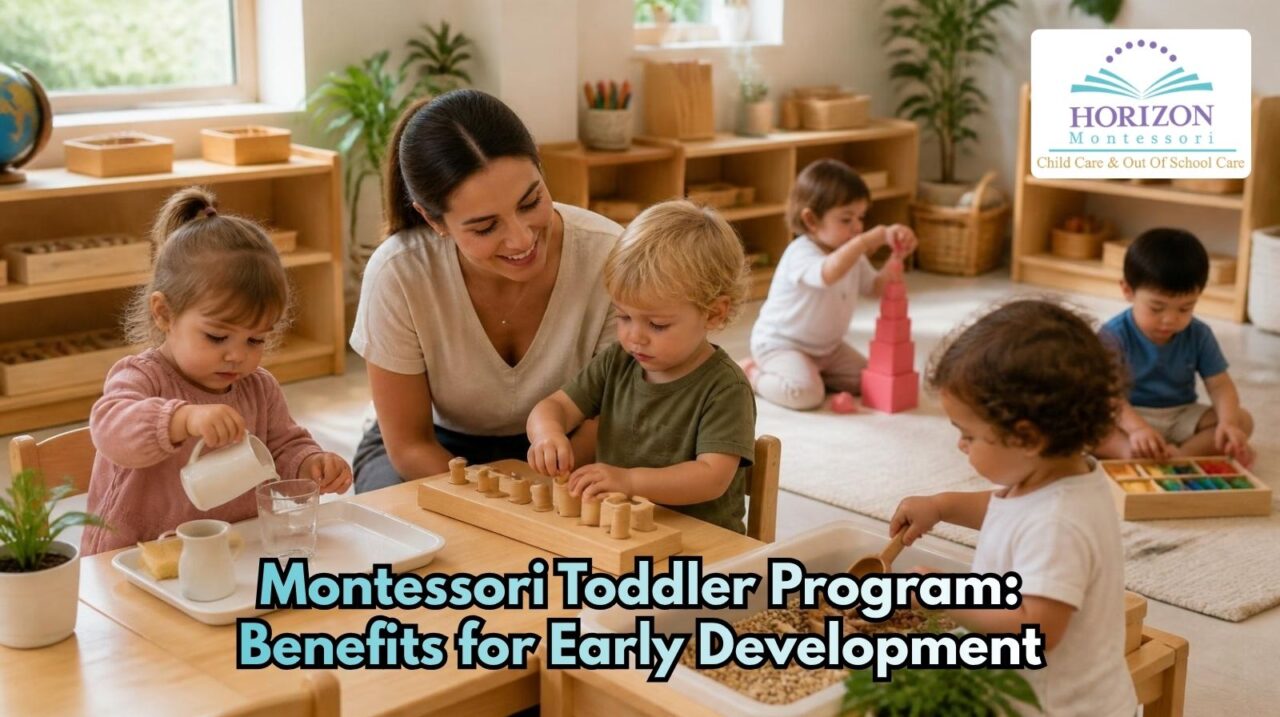
The toddler years—roughly between 18 months and 3 years—are a time of explosive growth, boundless curiosity, and rapid brain development. During this phase, young children transition from dependent infants into independent explorers eager to understand their world.
Choosing the right educational path during these crucial years sets the stage for future learning. A specialized Montessori toddler program offers a unique approach that respects child development, encouraging natural curiosity rather than forcing rigid instruction.
If you are considering early education options for your child, here is how a toddler-centered Montessori environment nurtures foundational skills for life.
What Makes a Toddler Montessori Environment Unique?
Unlike traditional classroom settings focused on teacher-led group instruction, a Montessori space for toddlers is thoughtfully prepared for small hands and big movements. Everything in the room—from low shelves to child-sized furniture—is designed to promote freedom within clear, gentle boundaries.
In a quality Montessori 0–3 years program, children choose purposeful learning activities from distinct areas, including practical life skills, language enrichment, sensory exploration, and creative expression.
5 Life-Changing Benefits of a Montessori Toddler Program
1. Fostering True Independence and Self-Reliance
Toddlers naturally crave independence. You have likely heard your child say, “I can do it myself!” Montessori classrooms honor this instinct by encouraging children to complete daily tasks independently.
In the classroom, toddlers practice:
- Dressing themselves and hanging up their coats
- Pouring water, serving snacks, and cleaning up small spills
- Choosing their own work stations and returning items to shelves
These practical life activities build self-esteem and give toddlers a profound sense of accomplishment.
2. Enhancing Fine and Gross Motor Coordination
Physical development is central to a toddler’s daily routine. Montessori materials feature self-correcting puzzles, bead threading, button frames, and pouring exercises that refine fine motor control and eye-hand coordination.
At the same time, open classroom layouts allow children to practice large motor movements through balance exercises, carrying sensory trays, and structured outdoor play. This physical confidence directly supports later skills like writing, drawing, and sports participation.
3. Accelerated Speech and Language Development
The period between 1 and 3 years is critical for language acquisition. In a Montessori setting, educators treat toddlers as capable communicators by using precise, rich vocabulary rather than simplified baby talk.
Activities that boost language growth include:
- Storytelling sessions with realistic imagery
- Group singing, rhyming, and expressive language games
- Object-sorting tasks that expand everyday vocabulary
When toddlers enroll in a specialized toddler daycare Fort McMurray, they learn to articulate their needs, feelings, and questions with clarity.
4. Building Emotional Regulation and Social Grace
Sharing, waiting for a turn, and expressing frustration constructively are complex skills for a young child. Montessori classrooms place a heavy emphasis on “Grace and Courtesy” lessons.
Through gentle guidance, toddlers learn to:
- Wait patiently while another classmate finishes using a material
- Respect personal boundaries and shared learning spaces
- Express feelings through words rather than outbursts
This respectful environment teaches empathy and builds strong social foundations, preparing children to transition seamlessly into preschool and formal schooling later on.
5. Developing Deep Concentration and Problem-Solving Skills
Many people believe toddlers have extremely short attention spans. However, when children engage with activities that match their specific developmental interests, they can focus for surprisingly long periods.
Montessori materials are designed with a built-in “control of error.” This means the child can see their own mistakes—like a puzzle piece not fitting—and correct it without adult intervention. This self-correction process builds:
- Long-term problem-solving capacity
- Patience and persistence through trial and error
- Strong concentration skills that benefit future academic pursuits
For parents evaluating early learning options, combining structured hands-on discovery with a play-based learning daycare framework provides the ideal balance for young minds.
Key Differences: Montessori vs. Traditional Toddler Care
| Feature | Montessori Toddler Program | Standard Toddler Care |
| Classroom Focus | Child-centered, self-directed exploration | Teacher-directed group activities |
| Learning Materials | Real, hands-on, self-correcting wooden tools | Plastic toys, passive entertainment |
| Routine | Uninterrupted work blocks for deep focus | Fixed, fast-paced scheduled rotations |
| Social Growth | Focus on independence and respect | Focus on basic supervision and play |
Is a Montessori Toddler Program Right for Your Child?
Every child grows at their own individual pace. If you value independence, critical thinking, emotional confidence, and a lifelong passion for discovery, a toddler Montessori framework offers exceptional benefits.
When touring prospective centers, look for early childhood education Fort McMurray providers that offer certified educators, calm environments, and age-appropriate learning resources tailored to the 0–3 age group.
Empower Your Toddler’s Journey at Horizon OSC
Looking for a warm, nurturing environment where your toddler can thrive and grow independently? At Horizon Childcare & Out of School Care, our specialized toddler space combines authentic Montessori principles with attentive, loving care.
Our certified early childhood educators are dedicated to guiding your child through every milestone with respect, patience, and encouragement.
Give Your Child the Best Start Today:
- Address: 190 Tamarack Way, Fort McMurray
- Phone: 587-276-0082
- Email: horizonchildcare@fmmacad.com
- Standard Operating Hours: 6:00 am – 6:00 pm (Monday – Friday)
- Office Hours: Monday – Friday, 8:30 am – 4:30 pm
Explore our registration guidelines page to learn more about enrollment steps, program options, and fee reduction grant details!
Frequently Asked Questions (FAQs)
At what age can my child join a Montessori toddler program?
Most Montessori toddler programs cater to children aged 18 months to 3 years. This phase—often referred to as the “toddler community”—is specifically designed for toddlers who are confident walkers and ready to explore independent hands-on activities.
Is Montessori suitable for active or energetic toddlers?
Yes, absolutely! The Montessori approach is ideal for energetic toddlers because it does not require them to sit still for long periods. Instead, it allows children to move freely around the classroom, choose engaging tasks, and channel their physical energy into purposeful learning.
How does Montessori help with toddler tantrums and emotional growth?
Montessori environments focus heavily on “Grace and Courtesy” lessons. Educators guide toddlers to express their needs using words, recognize their emotions, and practice self-soothing techniques, which significantly reduces frustration and emotional outbursts.
How can parents support Montessori learning at home?
Parents can implement simple Montessori principles at home by setting up child-accessible spaces (like low shelves and hooks), encouraging self-dressing, involving toddlers in light kitchen chores, and providing child-sized tools. You can explore our registration guidelines page to learn more about how our educators partner with parents!