
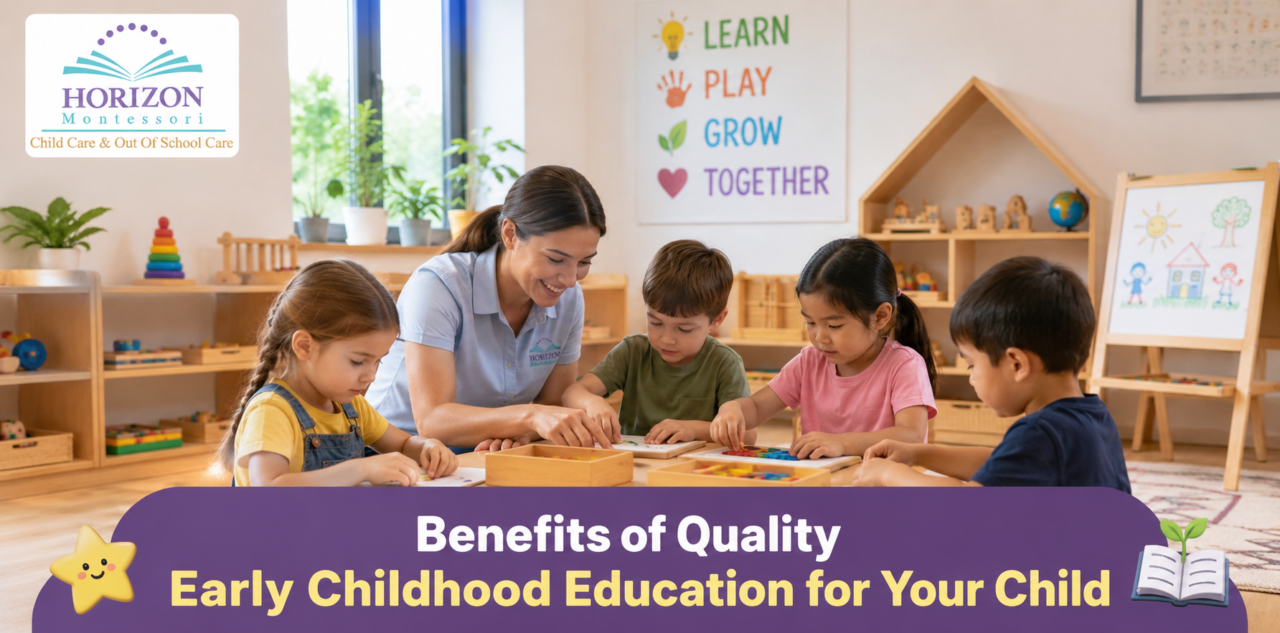
The early years give children an important foundation for future learning and development. During this period, children rapidly develop language, communication, social skills, movement, emotional awareness, and early thinking abilities.
However, early education is not simply about teaching children letters and numbers before kindergarten. Quality early education creates opportunities for children to explore, ask questions, interact with others, practice independence, and learn through meaningful experiences.
Research from Harvard University’s Center on the Developing Child shows that early experiences and responsive relationships with caregivers help shape brain architecture and provide a foundation for later learning, behaviour, health, and well-being.
For families considering child care Fort McMurray, the quality of the environment matters as much as finding a convenient location. A well-designed early learning program should support the whole child rather than focus only on academic preparation.
What Is Quality Early Childhood Education?
Quality early childhood education combines care, learning, relationships, play, and developmentally appropriate experiences.
Unlike a traditional classroom focused mainly on academic instruction, early childhood programs often use play and hands-on activities as major learning tools.
Children may learn through:
- Storytelling and conversations
- Music and movement
- Art and creative activities
- Building and construction
- Puzzles and sorting
- Outdoor exploration
- Dramatic play
- Sensory activities
- Practical life activities
- Group games
- Books and early literacy activities
The goal is to help children become active participants in their learning.
Learning Through Play
Play is one of the most natural ways young children learn.
When children build a tower, for example, they are not simply playing with blocks. They may be learning about balance, shapes, size, planning, problem-solving, communication, and persistence.
During pretend play, children can practice language, social interaction, imagination, and emotional expression.
As a result, a strong early learning centre Fort McMurray should provide children with time and space to explore through meaningful play.
7 Major Benefits of Quality Early Learning
1. Supports Cognitive Development
Cognitive development refers to how children think, understand, remember, reason, and solve problems.
Quality early learning environments give children opportunities to make choices, investigate materials, recognize patterns, ask questions, and find solutions.
A child might sort objects by colour, build a structure, complete a puzzle, or predict what happens during a simple science activity.
These experiences help children practice thinking skills in ways that are appropriate for their developmental stage.
Harvard’s Center on the Developing Child explains that brain development is an ongoing process in which early experiences help establish foundations for later learning and development.
2. Builds Language and Communication Skills
Children develop language through frequent, meaningful interactions.
Educators can support language development by talking with children, reading stories, asking open-ended questions, singing songs, and encouraging children to explain their ideas.
For example, instead of asking only, “What colour is this?” an educator might ask, “What do you think will happen if we mix these colours?”
This type of conversation encourages children to use language to describe, predict, explain, and communicate.
A quality preschool Fort McMurray program should provide many opportunities for children to listen and speak throughout the day.
3. Develops Social Skills
Young children are still learning how to cooperate with others.
An early learning environment gives them regular opportunities to practice:
- Sharing
- Taking turns
- Listening
- Cooperation
- Teamwork
- Respect
- Conflict resolution
- Making friends
- Asking for help
These skills do not develop through lectures alone. Children need repeated opportunities to practice social behaviour in real situations.
Qualified early childhood educators Fort McMurray can guide children through these interactions and help them understand appropriate ways to communicate and solve problems.
4. Strengthens Emotional Development
Early childhood education also supports emotional development.
Children gradually learn to recognize emotions, express feelings, manage frustration, wait for turns, and recover from disappointment.
A responsive educator can acknowledge a child’s feelings while helping the child develop appropriate coping strategies.
Harvard research emphasizes that responsive interactions between children and caring adults play an important role in healthy development.
A predictable environment can also help children feel secure.
When children know what to expect, they can become more confident navigating daily routines.
5. Encourages Independence and Self-Confidence
Quality early learning should not mean adults do everything for children.
Instead, educators can give children appropriate opportunities to do things independently.
Children might:
- Put away their materials
- Choose an activity
- Wash their hands
- Put on outdoor clothing
- Help prepare a snack
- Organize classroom materials
- Complete simple practical tasks
These experiences help children understand that they are capable.
Small responsibilities can gradually build independence, confidence, and a sense of responsibility.
6. Supports Physical Development
Physical development is another important part of early childhood education.
Children need opportunities to develop both large and small motor skills.
Gross motor activities may include running, jumping, climbing, balancing, dancing, and outdoor games.
Fine motor activities may include drawing, cutting, threading, building, puzzles, and manipulating small learning materials.
A balanced program should provide both active movement and quieter activities.
7. Builds School Readiness
School readiness involves much more than knowing the alphabet.
Children entering kindergarten benefit from skills such as:
- Listening to instructions
- Communicating needs
- Following routines
- Taking turns
- Managing personal belongings
- Participating in group activities
- Staying engaged with tasks
- Solving simple problems
- Building early literacy and numeracy skills
Quality early education can help children develop these abilities naturally through daily experiences.
The Government of Canada notes that children who regularly participate in early childhood education programs can develop stronger social skills, improve reading and mathematics skills, develop better work habits, and become more engaged in learning.
The Role of Early Childhood Educators
The quality of an early learning program depends heavily on the people who work with children.
Early childhood educators do much more than supervise children.
According to Alberta’s occupational guidance, early childhood educators plan and implement experiences and environments that address children’s social, physical, intellectual, creative, cultural, emotional, and developmental needs. They also use play-based learning, establish supportive routines, and encourage problem-solving and positive social skills.
Why Qualified Educators Matter
A trained educator can observe children’s interests and development and use those observations to guide activities.
For example, if children show an interest in insects, an educator could introduce books, art, counting activities, outdoor observation, and simple science discussions around that interest.
This approach makes learning more engaging.
In Alberta, staff working in licensed daycare, out-of-school care, group family child care, and preschool programs must meet provincial early childhood educator certification requirements.
Parents should therefore ask about educator qualifications, experience, training, and ongoing professional development when evaluating early childhood education programs Fort McMurray.
What Should Parents Look for in an Early Learning Program?
Choosing an early learning program requires more than comparing prices or locations.
A Safe and Welcoming Environment
Look for a clean, organized environment where children can move safely and access age-appropriate materials.
The space should feel welcoming rather than overly restrictive.
Developmentally Appropriate Activities
Activities should match children’s ages, abilities, interests, and developmental stages.
Children should have opportunities to explore rather than spend the entire day completing worksheets.
Caring Adult-Child Relationships
Observe how educators speak to children.
Do they listen? Do they get down to the child’s level? Do they respond calmly? Do children appear comfortable asking for help?
These everyday interactions can tell parents a great deal about program quality.
Balanced Daily Routines
Children need a balance of active and quiet experiences.
A strong routine may include free play, educator-guided activities, outdoor time, meals or snacks, rest when appropriate, group experiences, and transitions.
Family Communication
Parents should understand how the centre communicates with families.
Ask how educators share information about children’s activities, progress, routines, and daily experiences.
Strong communication creates continuity between home and the early learning environment.
Early Learning Fort McMurray: Why Local Families Should Look Carefully
Families searching for early learning Fort McMurray have different needs.
Some parents need full-day child care. Others may be looking for preschool experiences or a program that prepares their child for kindergarten.
Location and daily schedules also matter.
A convenient early learning centre Fort McMurray can make daily drop-offs and pickups easier, but convenience should not be the only deciding factor.
Parents should also consider the learning environment, educator qualifications, group structure, activities, safety procedures, communication, and the overall approach to child development.
For families comparing preschool Fort McMurray options, it is useful to visit programs in person when possible.
Observe how educators interact with children. Ask what a typical day looks like. Find out how the program supports different developmental needs.
Fort McMurray’s Community Context
A local program should understand the needs of families in its community.
Fort McMurray families may have different work schedules, commuting patterns, family structures, and child care requirements.
A quality program should offer clear information about hours, enrollment, routines, policies, and available services.
For parents searching for child care Fort McMurray, the best choice is one that combines practical convenience with a nurturing and developmentally appropriate environment.
Early Childhood Education Benefits Extend Beyond the Classroom
The value of quality early education is not limited to what happens inside the centre.
Children bring the skills they practice into everyday life.
A child who learns to communicate needs can use that skill at home. A child who practices problem-solving can use those strategies during play. A child who learns to take turns can apply that skill with siblings and friends.
The Government of Canada states that high-quality, affordable, flexible, and inclusive early learning and child care can support children’s development while also helping families participate in the workforce.
Long-term research has also associated high-quality early learning and child care with positive outcomes in areas such as social and emotional skills, educational achievement, health, and later economic outcomes.
However, quality matters.
Simply enrolling a child in a program does not guarantee the same developmental benefits. The environment, relationships, educator practices, activities, and consistency of care all contribute to the child’s experience.
How Parents Can Support Early Learning at Home
Early education works best when learning continues at home.
Parents can support development through simple everyday activities.
Read Together
Read books regularly and ask questions about the story.
Instead of only reading the words, ask your child what they think will happen next.
Encourage Conversation
Talk about everyday experiences.
Ask your child to describe what they saw, how something works, or how they felt about an experience.
Let Children Help
Give children simple responsibilities such as putting toys away, sorting laundry, setting the table, or helping prepare food.
Encourage Outdoor Play
Outdoor activities provide opportunities for movement, observation, exploration, and imaginative play.
Allow Time for Independent Play
Children do not need constant adult direction.
Safe, independent play can encourage creativity, decision-making, and problem-solving.
Frequently Asked Questions
What are the main benefits of quality early childhood education?
Quality early childhood education supports cognitive, language, social, emotional, and physical development. It also helps children build independence, communication skills, problem-solving abilities, and early learning habits. A strong program uses responsive relationships, play, routines, and age-appropriate activities to create a foundation for future learning.
Why is early learning important before kindergarten?
Early learning gives children opportunities to practice skills they will use in school, including listening, communication, cooperation, independence, and problem-solving. It can also introduce early literacy and numeracy concepts through play. Most importantly, children learn how to participate in routines, interact with peers, and approach new experiences with confidence.
How do I choose an early learning centre in Fort McMurray?
Start by comparing location, hours, educator qualifications, safety practices, learning activities, group sizes, routines, and communication with families. Visit the centre when possible and observe how educators interact with children. Ask what a typical day looks like and how the program supports children’s individual interests and developmental needs.
When should my child start an early childhood education program?
There is no single starting age that is right for every child. Families should consider the child’s development, family schedule, available programs, and readiness for group experiences. Some children benefit from early group care, while others begin later. A quality program should adapt its approach to children’s developmental needs.
Who benefits from quality early childhood education?
Children can benefit from quality early childhood education through opportunities to develop social, emotional, language, physical, and cognitive skills. Families can also benefit from reliable child care and stronger connections with educators. The greatest value comes from programs that provide safe environments, responsive relationships, appropriate activities, and consistent support.
Conclusion
Quality early childhood education is about much more than preparing children for their first day of school.
It gives children opportunities to build relationships, explore ideas, develop independence, communicate, solve problems, manage emotions, and discover the world around them.
For families searching for early learning Fort McMurray, choosing the right environment can make an important difference in a child’s early experiences.
When comparing early childhood education programs Fort McMurray, look beyond convenience. Consider the educators, learning environment, daily routine, activities, safety, communication, and the way the program supports the whole child.
Horizon Childcare & Out of School Care is committed to providing families in Fort McMurray with a supportive environment where children can learn, explore, play, and grow.
To learn more about programs and child care options, contact Horizon Childcare & Out of School Care at +1587-276-0082 today.