
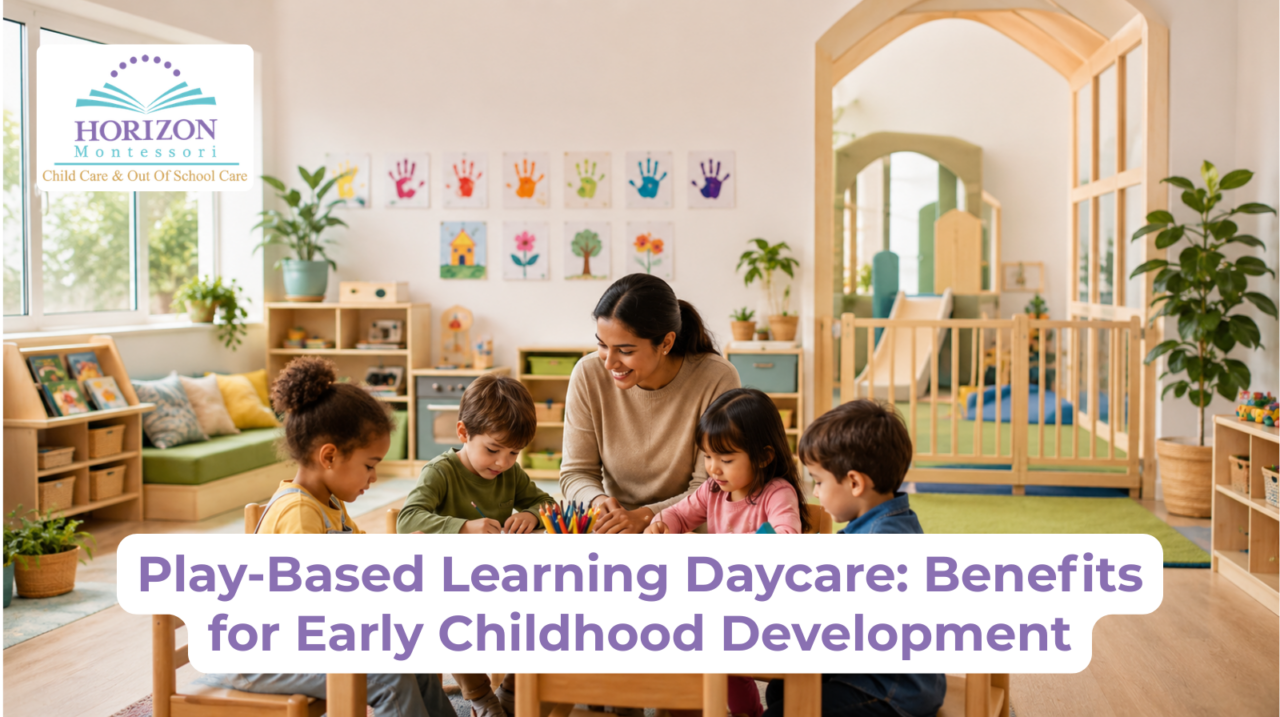
A play-based learning daycare helps children develop social, emotional, physical, and cognitive skills through interactive activities and guided play. Research shows that learning through play daycare programs improves creativity, communication, confidence, and problem-solving abilities during early childhood development. Horizon Childcare & Out of School Care in Fort McMurray provides structured early learning childcare programs designed to support healthy child growth.
Key Takeaways
- Play-based learning daycare programs improve early childhood development through hands-on experiences.
- Children learn communication, teamwork, and problem-solving through guided play.
- Early learning childcare supports emotional, cognitive, and social growth.
- Play-based preschool programs help children prepare for kindergarten and future learning.
- Horizon Childcare & Out of School Care in Fort McMurray offers safe and engaging child development daycare programs.
Trusted Childcare Programs Fort McMurray
The early years of a child’s life shape future learning, behavior, and emotional well-being. During this stage, children learn best through exploration, interaction, and hands-on experiences. That is why many educators and child development experts recommend play-based learning daycare programs.
Play-based daycare benefits go beyond entertainment. Structured play activities help children build important life skills while making learning enjoyable and meaningful. Studies show that children who participate in quality early learning childcare programs often develop stronger communication, creativity, and social abilities before starting school.
Parents in Fort McMurray are increasingly searching for trusted childcare programs that combine education, safety, and child-centered learning. Horizon Childcare & Out of School Care focuses on creating supportive environments where children can grow emotionally, socially, and academically through learning through play daycare activities.
What Is a Play-Based Learning Daycare?
A play-based learning daycare uses guided play activities to encourage learning and development. Instead of relying only on traditional classroom instruction, children learn through interactive experiences, creative exploration, and social interaction.
This approach supports natural curiosity and encourages children to engage actively with the world around them.
How Learning Through Play Works
Children absorb information best when they feel relaxed and interested. Play-based learning combines educational goals with enjoyable activities that support development.
Examples include:
- Building blocks for problem-solving
- Storytelling for language development
- Group games for social skills
- Art projects for creativity
- Outdoor activities for physical growth
As a result, children remain engaged while developing important skills for school and life.
Why Experts Recommend Play-Based Preschool Programs
Early childhood education experts recognize play as a critical part of healthy development. According to child development research, play-based programs improve brain development and support emotional resilience.
Children learn how to:
- Communicate effectively
- Work with others
- Solve problems independently
- Express emotions appropriately
- Build self-confidence
Furthermore, children often retain information better when they learn through active experiences instead of passive instruction.
Benefits of Play-Based Learning Daycare
Play-based daycare benefits affect every area of child development. These programs support emotional, cognitive, physical, and social growth during the most important learning years.
Emotional Development Through Play
Children learn emotional skills by interacting with caregivers and peers in supportive environments.
Building Confidence
Children gain confidence when they complete activities independently and receive positive encouragement.
Simple tasks such as puzzles, creative projects, or group participation help children feel capable and proud of their accomplishments.
Encouraging Emotional Expression
Play allows children to express emotions naturally. Through pretend play, storytelling, and creative activities, children learn how to communicate feelings and manage emotions in healthy ways.
As a result, children develop stronger emotional regulation skills.
Reducing Anxiety and Stress
Structured play environments create comfort and predictability. Children feel safer when daily routines include enjoyable learning experiences.
Research suggests that positive play experiences reduce stress and improve emotional well-being in young children.
Cognitive Benefits of Early Learning Childcare
Early learning childcare programs help children build foundational thinking and learning skills before entering school.
Problem-Solving Skills
Interactive activities challenge children to think critically and solve simple problems independently.
Examples include:
- Building structures
- Sorting games
- Matching activities
- Memory exercises
- Puzzle-solving
These experiences strengthen logical thinking and concentration.
Language and Communication Development
Play-based preschool programs encourage children to communicate frequently with peers and educators.
Activities such as storytelling, songs, and role-playing improve:
- Vocabulary
- Sentence structure
- Listening skills
- Verbal confidence
Studies show that children exposed to interactive communication activities develop stronger literacy skills.
Creativity and Imagination
Creative play stimulates imagination and innovative thinking.
Children participating in dramatic play, drawing, music, and storytelling activities learn to think creatively and express ideas more confidently.
This creativity also supports future academic problem-solving skills.
Social Development in Child Development Daycare
Social interaction is one of the most valuable aspects of play-based learning daycare programs.
Learning Cooperation and Teamwork
Children learn how to work together during group games and shared activities.
They practice:
- Sharing
- Taking turns
- Listening to others
- Following instructions
- Respecting boundaries
These experiences prepare children for school and social environments.
Conflict Resolution Skills
Children occasionally experience disagreements during play. Educators guide them through respectful problem-solving strategies.
This teaches children how to:
- Express feelings calmly
- Understand different perspectives
- Solve conflicts peacefully
Consequently, children develop stronger communication and relationship skills.
Developing Empathy
Group play encourages children to recognize emotions in others and respond with kindness and understanding.
Empathy is an essential social skill that supports healthy friendships and emotional intelligence.
Physical Development Through Play-Based Activities
Physical activity is an important part of early childhood development.
Fine Motor Skill Development
Activities such as drawing, cutting, building, and crafting strengthen hand coordination and control.
Fine motor skills support future tasks like writing and self-care activities.
Gross Motor Skill Growth
Outdoor play and movement activities improve:
- Balance
- Coordination
- Strength
- Flexibility
Physical play also encourages healthy lifestyle habits from an early age.
Importance of Outdoor Learning
Outdoor environments stimulate curiosity and sensory exploration.
Nature-based activities encourage children to:
- Observe surroundings
- Ask questions
- Explore safely
- Develop physical confidence
Experts recommend daily outdoor play for healthy physical and mental development.
Why Structured Play Matters in Early Childhood Development
Some parents mistakenly believe play lacks educational value. However, structured play activities are intentionally designed to support learning goals.
Guided Learning Experiences
Professional educators create activities that teach specific developmental skills through play.
Examples include:
- Counting games for math readiness
- Storytime for literacy development
- Cooperative games for social skills
- Art activities for creativity
This balance between fun and learning keeps children motivated and engaged.
Encouraging Independent Learning
Play-based learning daycare programs encourage children to make choices, solve problems, and explore independently.
Independent learning builds confidence and decision-making abilities that support future academic success.
Supporting School Readiness
Children entering kindergarten benefit from previous exposure to structured group activities and educational routines.
Play-based preschool programs help children develop:
- Listening skills
- Focus and attention
- Classroom behavior
- Communication confidence
- Social cooperation
Research indicates that high-quality early learning programs improve long-term academic performance.
Features of a Quality Play-Based Daycare
Parents should look for several important features when choosing a play-based learning daycare.
Safe and Supportive Environment
Children learn best in secure and welcoming environments.
A quality daycare should include:
- Clean classrooms
- Safe play equipment
- Secure entry systems
- Organized learning spaces
- Positive caregiver interactions
Safety and emotional support are essential for effective learning.
Qualified Educators
Experienced childcare professionals understand child development principles and learning strategies.
Qualified staff help children:
- Build confidence
- Learn social skills
- Develop communication abilities
- Explore interests safely
Strong educator-child relationships improve learning outcomes significantly.
Balanced Daily Routines
Children thrive with structured routines that include:
- Learning activities
- Outdoor play
- Quiet time
- Creative exploration
- Meals and snacks
Consistent routines help children feel secure and emotionally balanced.
Local Relevance: Play-Based Learning in Fort McMurray
Families in Fort McMurray value childcare programs that support both learning and emotional well-being. Many parents work demanding schedules and need dependable daycare environments where children can thrive safely.
Horizon Childcare & Out of School Care provides play-based learning daycare programs designed around the developmental needs of young children in Fort McMurray.
The center focuses on:
- Social skill development
- Interactive educational activities
- Safe and structured play
- Emotional support and confidence building
Additionally, local families appreciate childcare programs that encourage creativity, communication, and school readiness through engaging daily experiences.
Fort McMurray parents seeking trusted child development daycare services often prefer programs that combine education, play, and caring supervision.
How Parents Can Support Learning Through Play at Home
Play-based learning should continue outside the daycare environment.
Encourage Creative Activities
Parents can support development through:
- Drawing
- Storytelling
- Pretend play
- Building games
- Music activities
These experiences strengthen creativity and communication.
Limit Passive Screen Time
Interactive play provides more developmental benefits than excessive screen use.
Experts recommend balancing digital entertainment with active learning experiences.
Read Together Daily
Reading improves language skills, emotional connection, and imagination.
Children exposed to daily reading activities often develop stronger literacy abilities before entering school.
Long-Term Benefits of Play-Based Preschool Programs
Children who participate in play-based preschool and early learning childcare programs often experience lasting developmental benefits.
Research links quality early childhood programs to:
- Better academic performance
- Improved emotional regulation
- Stronger social relationships
- Higher confidence levels
- Better communication skills
These early experiences build the foundation for future success in school and life.
Therefore, choosing a quality play-based learning daycare is one of the most valuable investments parents can make in their child’s development.
Frequently Asked Questions
What is a play-based learning daycare?
A play-based learning daycare uses structured play activities to support emotional, cognitive, physical, and social development. Children learn through hands-on experiences such as storytelling, creative projects, games, and group interaction. This approach encourages curiosity, communication, and independent thinking while making learning enjoyable and engaging.
Why is play important for early childhood development?
Play supports brain development, emotional growth, social skills, and problem-solving abilities during early childhood development. Through guided play activities, children build communication skills, confidence, creativity, and teamwork. Experts consider play essential because children naturally learn best through active exploration and interaction with their environment.
How does learning through play daycare prepare children for school?
Learning through play daycare programs help children develop focus, communication, listening, and cooperation skills needed for classroom success. Structured routines and interactive educational activities also improve school readiness. Children become more confident participating in group settings and following instructions before entering kindergarten.
What are the benefits of play-based preschool programs?
Play-based preschool programs improve creativity, social interaction, emotional regulation, and cognitive development. Children strengthen language skills, problem-solving abilities, and physical coordination through hands-on learning experiences. These programs also encourage independence and confidence while supporting healthy emotional and academic growth.
Who should choose a child development daycare program?
Parents seeking balanced childcare that combines education, safety, and emotional support should consider child development daycare programs. These programs are ideal for families who want children to build social skills, confidence, and early learning abilities in structured and nurturing environments guided by trained educators.
Conclusion
Play-based learning daycare programs help children develop important life skills while making learning enjoyable and meaningful. Through guided play, children improve communication, creativity, emotional regulation, and problem-solving abilities during critical stages of early childhood development.
Horizon Childcare & Out of School Care proudly supports families in Fort McMurray with safe, engaging, and educational early learning childcare programs designed around child-centered growth and development.
To learn more about play-based preschool and child development daycare programs, contact Horizon Childcare & Out of School Care today at +1 587-276-0082.